Disclosure: Adblock YouTube NoADS in this comparison is made by the team behind App How To Use It. The other extensions are independent.
Finding a working adblock for YouTube got harder in the last few years. YouTube started warning viewers who use ad blockers in 2023, and Chrome’s switch to the Manifest V3 extension format in 2024 and 2025 pushed some popular blockers, including the original uBlock Origin, out of the Chrome Web Store. This page compares the options that are available in Chrome and Edge today, and explains the trade-offs honestly.
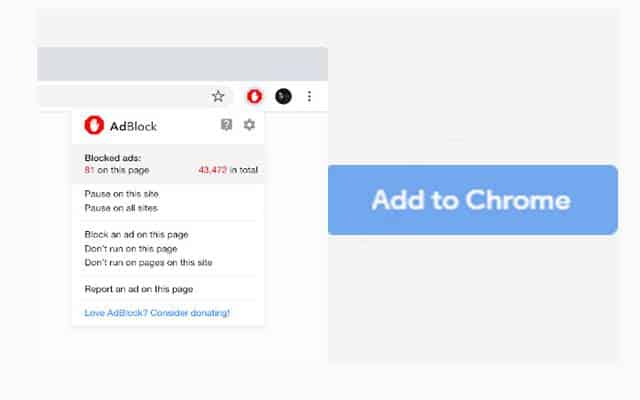
Ad blockers for Chrome compared
| Extension | Blocks ads on | Chrome Web Store users | Worth knowing |
|---|---|---|---|
| AdBlock | All sites | 64,000,000 | Shows some “acceptable ads” unless you switch that off |
| Adblock Plus | All sites | 40,000,000 | Same acceptable-ads setting |
| uBlock Origin Lite | All sites | 20,000,000 | The Manifest V3 version of uBlock Origin; fewer advanced options |
| AdGuard AdBlocker | All sites | 17,000,000 | Many filter lists, updated often |
| Ghostery | All sites | 2,000,000 | Also focuses on blocking trackers |
| Adblock YouTube NoADS (ours) | YouTube only | 3,000 | Does not touch other websites |
User counts are rounded figures from the Chrome Web Store, checked in September 2026.
What happened to uBlock Origin?
Google phased out extensions built on the older Manifest V2 format, and the original uBlock Origin was one of them, so it can no longer be installed from the Chrome Web Store. Its developer publishes uBlock Origin Lite for Chrome instead. The full uBlock Origin is still available for Firefox.
Which one should you choose?
- You want one blocker for the whole web: AdGuard or uBlock Origin Lite. Both block without an acceptable-ads list.
- You want the familiar names: AdBlock or Adblock Plus; turn off acceptable ads in their settings if you want everything blocked.
- You also care about tracking: Ghostery.
- Ads only bother you on YouTube: our Adblock YouTube NoADS, which leaves other sites alone.
Why an adblock for YouTube stops working sometimes
YouTube keeps changing how ads are delivered, and has even tested inserting them directly into the video stream. Ad blockers answer with filter updates, which arrive automatically but not instantly. That is why an adblock for YouTube can work perfectly for a month and then show ads, a warning or a blank player for a day or two. Blockers with frequently updated filter lists, such as AdGuard and uBlock Origin Lite, tend to recover fastest. If a video will not play at all, pause the blocker for youtube.com, reload, and check again after the next update.
Does YouTube allow ad blockers?
No. Its terms of service do not allow them, and YouTube regularly changes how ads are delivered, so any blocker can stop working for a while or trigger a warning. When that happens, updating the extension usually helps. The only ad-free option YouTube supports is YouTube Premium, which also covers the mobile and TV apps and pays creators.
How to install an ad blocker in Chrome
- Open the extension’s Chrome Web Store page from the list above.
- Click Add to Chrome, then Add extension.
- Reload open YouTube tabs so the blocker can start working on them.
- Use only one general ad blocker at a time; two can conflict and break pages.
Frequently asked questions
Do ad blockers work in the YouTube app?
No. Extensions only work in desktop browsers. On phones and TVs, YouTube Premium is the way to remove ads.
Is there a browser with a built-in ad blocker?
Yes. Brave blocks ads and trackers by default, and Opera includes an optional ad blocker in its settings.
Will an ad blocker slow down Chrome?
Usually the opposite: pages load fewer scripts and images. Running several blockers at once is what slows things down.
There is no perfect adblock for YouTube, because YouTube keeps changing the rules. Pick one maintained blocker from the table, keep it updated, and consider supporting the channels you watch most. For other ways to improve YouTube, see our list of free YouTube extensions.